Writing VO-DML Models
Authoring Ecosystem
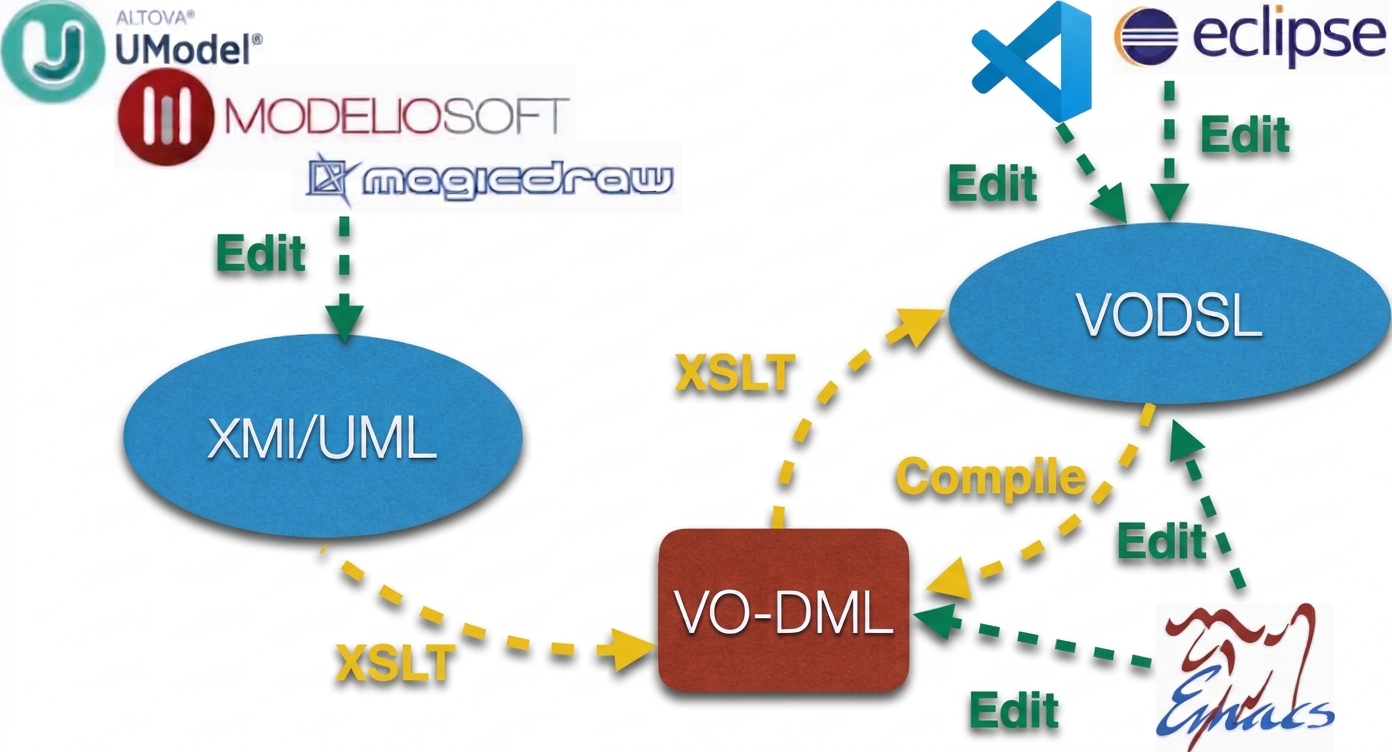
Although VO-DML/XML is the standard serialization of VO-DML models, and it is possible to create VO-DML directly by editing in a text editor (and the model schema might be helpful in guiding this editing), it is generally easier to model using either
-
VODSL Although it is possible to edit VODSL with any plain text editor, an Eclipse plug-in and a VSCode extension have been created, that allow VODSL source to be edited whilst taking advantage of the all the features of the IDE that make understanding an navigating the code easier.
It is possible to import existing data models by;
- Adding the published jar as a dependency in the
build.gradle.ktsfile, e.g.the tooling then makes sure that the model files are available for local import.dependencies { implementation("net.ivoa.vo-dml:ivoa-base:1.0-SNAPSHOT") } -
Importing into the model file, and there are two cases whether VO-DML or VODSL is considered the 'working source'
-
VO-DML - the tooling only requires the file name (it automatically creates an XML catalog which can resolve to the absolute path)
<import> <name>ivoa</name> <url>IVOA-v1.0.vo-dml.xml</url> </import> -
VODSL - a relative path import should be used - the tooling automatically creates a vodsl file to import into the
build/tmpdirectory so that the exact form of the relative path depends on where the including source file is located.include "../../build/tmp/IVOA-v1.0.vodsl"
-